

Not Your Dad's Car Magazine: How Emma Roshan Is Redefining the Creative World of Motorsport Media
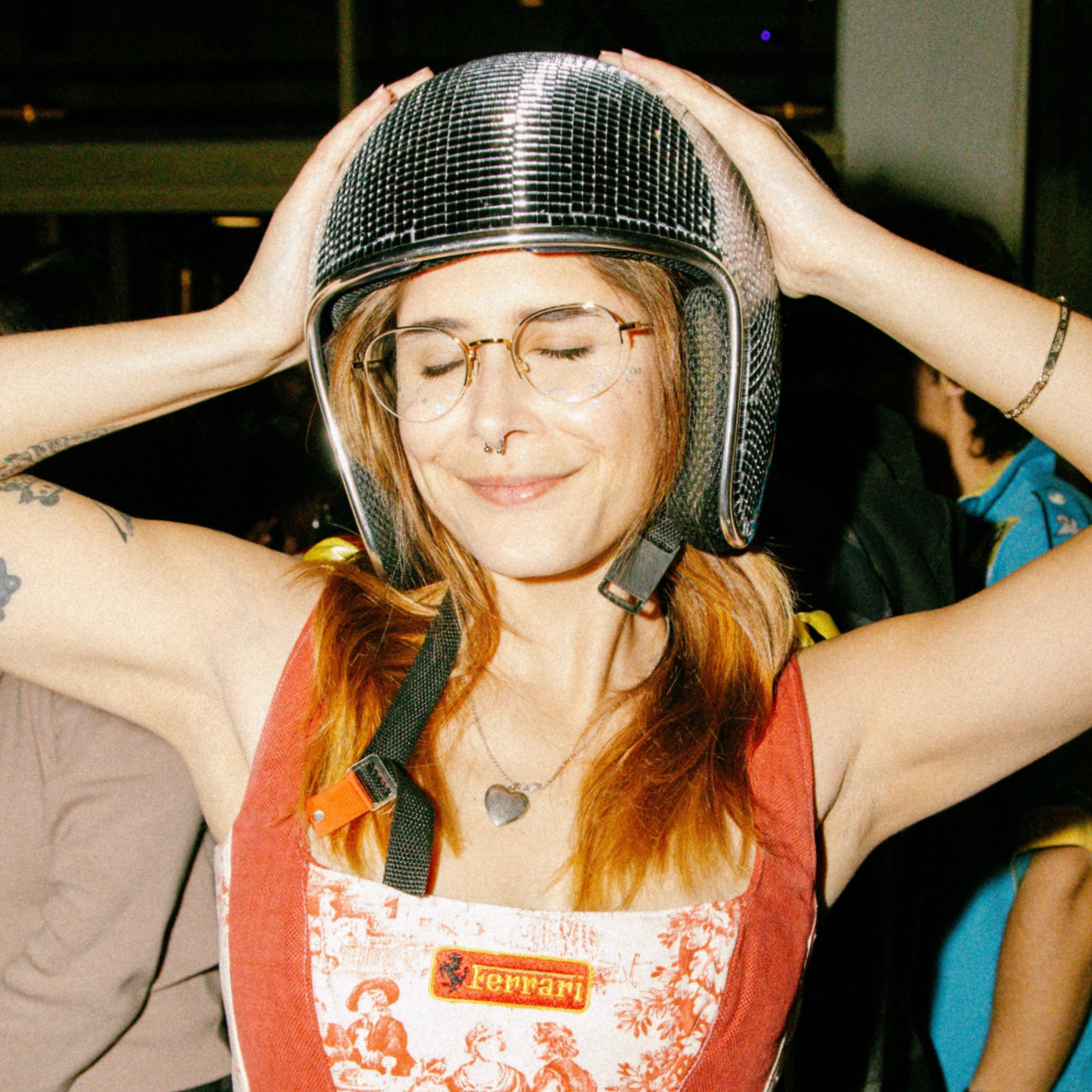
When Emma Roshan first got the call about a Formula 1 magazine, she knew two Spanish drivers and not much else.
That's not a disclaimer. That's the whole point.
Emma is the Creative Director and founding member of Esses, the lifestyle motorsport magazine that has been quietly but deliberately redefining what F1 media can look like since its launch in late 2024. She and Ojus Jain, the founder of Esses, are the reason the magazine feels the way it does in your hands, looks the way it does on your coffee table, and tells the stories it tells instead of the ones every other outlet is already telling. She built it from scratch, taught herself an entirely new discipline to do it, and fell genuinely, deeply in love with the sport along the way.
We sat down with Emma to talk about what it actually takes to create something this considered, and what it means to find your place in a world that wasn't exactly waiting for you.

She Didn't Come From Here. That Was the Point.
Emma grew up in Spain, where F1 occasionally played on the TV in the background while her dad watched. She filed it away as "a thing her dad did" and moved on. She always liked to draw, and pursued a degree in design. Her actual path took her to branding and product design: apps, websites, interfaces, digital experiences. First as an intern at the New York Times, where she worked on the paper’s digital homepage, then at Semafor, a global news startup in Washington, D.C.
It was at Semafor that she met Ojus Jain,. They became friends. And one day, he called with an idea.
"He wanted me to design a culture and lifestyle magazine centered around the world of Formula 1," Emma recalls. "And I was like, well, I know Fernando Alonso and Carlos Sainz because they're Spanish. I’ve also heard of Lewis Hamilton. That was about as much as I knew about F1."
However, she knew deep down it was one of those opportunities you just had to say yes to. So she did. Not because she felt prepared, but because she trusted Ojus, and trusted herself enough to take the risk. "I think that's what it takes," she says. "Having a little bit of trust in yourself in order to get things going."
What followed was a full immersion. She watched Drive to Survive. She went down a rabbit hole, learning the drivers, the teams, and history. She started watching races. And somewhere in that process, something shifted. "I really naturally ended up getting into a sport I originally got into because of my job," she says. "That's what's most interesting to me, just how naturally I became a fan."
Her outsider perspective, it turns out, was one of her greatest assets. Coming in fresh meant she could see clearly what was missing, what was overdone, and what a new kind of motorsport publication could actually be.

The Magazine She Couldn't Find Anywhere Else
Go to any bookstore and find the motorsport section. You'll see a lot of red. A lot of black. A lot of cars.
That's exactly what Emma and Ojus did not want to make.
"The whole purpose was to highlight the people, the culture, the lifestyle: the food, the art, the design," she explains. "Because F1, and motorsport especially, touches on all those things, even if people don’t realize it." From the very beginning, the vision for Esses was a lifestyle magazine with motorsport at its center, not a car magazine that happens to cover F1.
Translating that vision into a physical object meant Emma had to essentially start over as a designer. Her background was in digital product design: screens and interfaces, not paper and ink. She had never designed a magazine and sent it off to print. Especially not one read by thousands of people. So she went to a magazine store and bought everything that felt close to what she was chasing. Kinfolk, The Gentlewoman, Apartamento, and a handful of other lifestyle titles. She also learned about a whole universe of indie print she’d never been exposed to in her digital design bubble. Byline, Chutney, Elastic. She pored over them, studied them, asked herself: what is a lifestyle magazine? What does “taste” look like in print?
The answers shaped every decision that followed. The embossed, matte cover. The thicker paper. The 136-page count. The coffee table weight and feel. "We didn't want it to be a glossy magazine you read in the bathroom," she says. "We wanted it to be almost like a coffee table book, something you can put next to your candles and your cup of coffee and feel like it actually belongs there."
They went further than any design file could take her. They contacted their Belgian printer and asked for a mailer full of paper samples. Touched them. Held them. Cut them down to the intended size of the magazine to understand how it would feel in someone's hands before a single page had been laid out. "Those things might seem silly," she says, "but they really help you get a sense of what you're actually making."
She went on-site herself to oversee color accuracy. She built the Esses website from scratch in Webflow. She obsessed over every pitch deck. Every single touchpoint, because if the magazine was going to be premium, everything around it had to match.
"It's not just a magazine. It's a media company," she says. "You have to make sure every touchpoint feels as intentional as the product itself."


Designing for the Fan Who Actually Exists
There's a reason Esses doesn't look like anything else in the motorsport world, and it comes down to who Emma was designing for.
"Most new F1 fans these days are women, especially young women under 30," Emma points out. "The demographic of F1 has changed so much in the past few years, and the existing print media world hadn't caught up." Ojus would often ask her directly what she, as a young woman getting into F1 in real time, actually wanted to see. The answer helped shape everything: less about the cars, more about the personalities. Clean. Elegant. Fun. Colorful. "All things we didn't really see in the motorsport print world."
That orientation runs deeper than aesthetics. Esses is an visual-forward magazine, commissioning original art and photography for nearly every piece: a deliberate stance in an era of AI-generated everything. And who creates that art matters just as much as the art itself. When she has the time, Emma likes create illustrations for the magazine, but she usually relies on a roster of talented illustrators from all over the world.When Issue 2 featured a piece about Yuki Tsunoda and his love of food, with a culinary guide to Tokyo, Ojus made it a point to hire a Japanes artist to illustrate it, and Emma was immediately on board. "We know how much it means to the Japanese fans to be represented not just in their favorite driver, but in how the story is told."
The stories themselves reflect the same philosophy. One of Emma's personal favorites she's designed: a profile of Udoh Joy Ebaide, a Nigerian woman who completed a solo motorcycle tour across Africa and nearly broke a Guinness World Record for it. "That's not a story you'd find in any motorsport magazine. But those are exactly the kinds of voices Esses wants to elevate."
What Nobody Saw
Most people think Esses launched in October 2024, and sure, that's when the first event happened at the US Grand Prix in Austin, and when Issue 1 landed in readers' hands. What most people don't know is that Emma and the team had been working across timezones for months before that moment.
"We were working in the shadows almost," she says.
That time included raising investor money, building the website from scratch, and launching an Instagram presence, before there was even a magazine to sell. The goal was to build an audience first, so that when Issue 1 existed, people were already waiting for it.
The magazine itself, once they got to it, came together in less than two months. Everything else took the remaining time.
"When people find out we launched in October 2024, they don't realize there were a few months of work behind it. " Emma says. "Everything from raising money to finding the right people to talk to, to building everything from scratch."

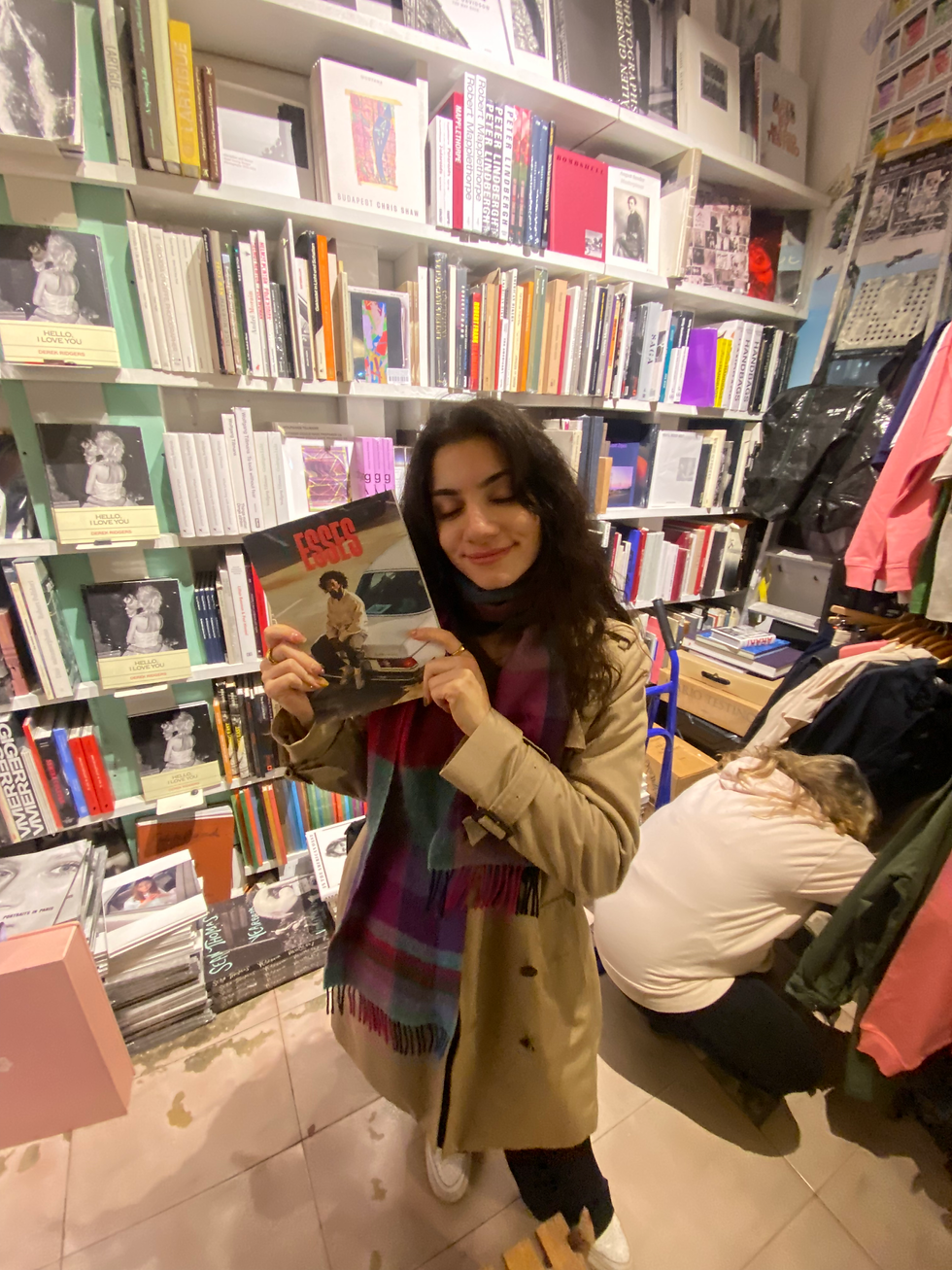
On Being a Woman in Motorsport When You Didn't Grow Up in It
There's a moment Emma describes that says a lot about how she's grown into this space. She was invited to a WhatsApp dinner for women in motorsport. And it hit her, sitting there: Oh. I am a woman in motorsport.
"It really took a while to internalize that," she says. "Like many other women, I felt a lot of imposter syndrome when I first started. I was like, I'm just getting to know this sport. I'm almost an outsider."
The imposter syndrome didn't vanish overnight. What she found instead was curiosity: genuine curiosity about the sport, the drivers and the culture, which slowly built into belonging. "It's that curiosity about the sport and about the people in it that really led me to feel more comfortable and to accept that title."
Now she's one of the people making space for others. Her advice for anyone who wants to work in motorsport, whether as a content creator, a designer, a journalist, or anything else, is both simple and, if we're honest, a little hard:
Take the step anyway.
"Men will apply for jobs they're underqualified for. Women won't, and those men still get those jobs, through sheer confidence," she says. "I don't know if what I had was confidence or delusion. Maybe a bit of both. But taking that step even when it was a little scary led to way better results than if I'd been cautious about it and doubted myself."
She's clear it's not about faking it. It's about realistic confidence and a little bit of audacity. "You don't need to know every F1 driver's favorite food to belong in this space. Does not knowing what DRS stands for negate your ability to create a magazine? No. It doesn't. Because you learn."
Imposter syndrome, she says, doesn't really go away. "People older than me in higher positions of power still feel imposter syndrome. But finding a community of people who will support you through that process, that's what makes you feel like you actually belong."

Where Emma Goes From Here
Emma sees Esses keeping the magazine at its core. She's too restless a designer to ever fully replicate a template, like most established magazines do, and too in love with the physical object to move beyond it. "Print is very much being kept alive by small and medium publications that are constantly innovating on what it means to consume content," she says. "My friends tell me they are tired of relying on their phones for everything, of doomscrolling after work because they don’t have the energy for anything else. I genuinely believe the solution is to put the phone down and pick up a physical book, a comic, or a magazine. Print is making a comeback because people are realizing they should’ve never abandoned it."
Events are growing. Their partnerships with Visa and Cash App in Miami and Austin taught the team something important: people show up not because of the brands, and not even because of Esses specifically. They show up because they're looking for community. "We live in an era of individuality, and people are desperate for community. We are providing that community," Emma says.
“I still remember hearing about people who had recently moved to New York City and felt isolated, but found a sense of belonging at a bar that hosted F1 watch parties. I loved the idea because it spoke to something deeper than simply gathering to eat, drink, and watch a race. Sports have a remarkable ability to bring people together and create community, stitching together the social fabric, especially for young people.”
The goal is more events, bigger events, events across the world, and a community that doesn't just follow Esses but actively belongs to it.
“One of my favorite memories was when Ojus and I were running down the Las Vegas Strip on our way to a meeting. I was carrying a stack of freshly printed copies of Issue 05, featuring Pierre Gasly on the cover, and accidentally dropped one. A guy nearby picked it up, looked at it, and said, ‘I have every issue of Esses, but I’ve never seen this one. Where did you guys get this?’ I’ll never forget the look on his face when we told him we were Esses. The genuine excitement was so rewarding, and one of those times the impact of what we were building felt tangible.”
And more stories. Always more stories from the margins of the sport, from the voices who aren't normally getting 24 issues a year of coverage, from the countries F1 has readers in that it rarely writes about.
"There's so much female talent out there. From countries you would never even think of," Emma says. "The goal is to find those voices and give them a platform."
That, in the end, is what makes Emma's work so compelling and what makes Esses unlike anything else on that magazine shelf. She built a publication rooted in the belief that the sport is bigger than the 22 people racing in it. That it belongs to the people watching, and the people telling the stories, and the people making art around it. That it belongs to all of us.
She just had to trust herself enough to make it.
Pick up Issue 06 of Esses at essesmag.com and follow along at @essesmag.
Comments